


Building a scalable and equitable tech company, requires having the right foundations early on.
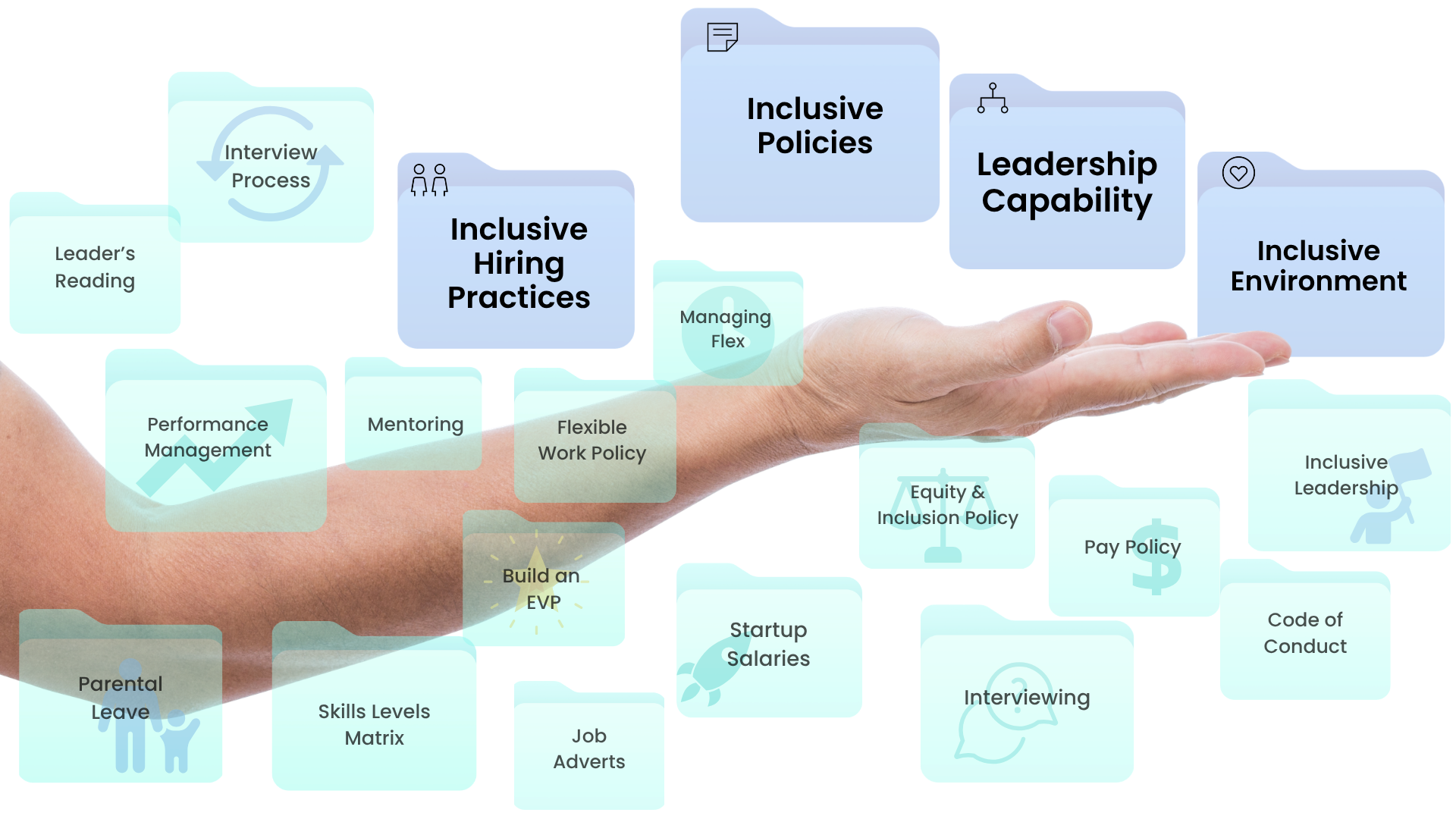
The Project F Startup Toolkit consolidates what would normally take thousands of dollars and months of specialist work into a ready-to-use blueprint for fair hiring, equitable pay, and strong culture.
Designed for early-stage teams, it gives you a level of structure and clarity most startups don’t achieve until much later.
Case Studies
Many startups and scaleups have used the Project F Startup Toolkit to create a foundadtional environment that fosters growing a healthily equitable team from the start.
Take a look at the two examples below.
Click through below to earn more about what’s included in the toolkit.
Why build an inclusive and equitable startup?
Building an inclusive and equitable workplace from the start is not just about doing the right thing. It can strengthen your ability to attract investment, compete for talent, build a healthy culture and scale sustainably.
For startups, the advantage is timing. You have the opportunity to put fair and inclusive practices in place before habits, systems and inequalities become embedded. That means fewer problems to unwind later, and a stronger foundation for growth.
More attractive to investors
Investors look for strong governance, people practices and readiness to scale.Compete for a wider pool of talent
Build a workplace where more great people can see themselves succeeding.Hire better, not just faster
Reduce bias in recruitment and make decisions based on capability and potential.Keep the people you worked hard to hire
Inclusive workplaces are more likely to create belonging, opportunity and reasons to stay.Build the right culture before you scale
It is far easier to establish equitable practices with 20 people than retrofit them at 200.Avoid importing tech’s existing gender inequalities
Rapid growth can quickly reproduce the same patterns seen across the wider sector unless you design against them.Strengthen your employer brand
Candidates increasingly look at culture, flexibility, leadership and values when choosing where to work.Create fairer pathways into leadership
Put the foundations in place before informal networks and “who you know” begin determining who progresses.Make flexibility work from day one
Design jobs and ways of working that support carers, parents and different life circumstances without penalising progression.Be better prepared for enterprise customers and procurement
Larger organisations increasingly scrutinise suppliers’ governance, workforce practices and social impact.Reduce people and culture risk as you grow
Clear expectations, policies and decision-making processes help prevent inequities becoming systemic problems.Build a company that can scale without leaving women behind
Growth should expand opportunity, not widen existing gaps.