
Business Case for Equal Parental Leave

Equal parental leave is not a cost burden.
It is a talent, productivity and retention strategy with measurable returns. This business case outlines the commercial upside, from reducing attrition and accelerating career progression to strengthening employer brand and improving hiring outcomes.
Use it to demonstrate why equal leave pays for itself many times over.
And, while you’re here, try out the cost modelling tool below to see what it would cost your business vs the gain.
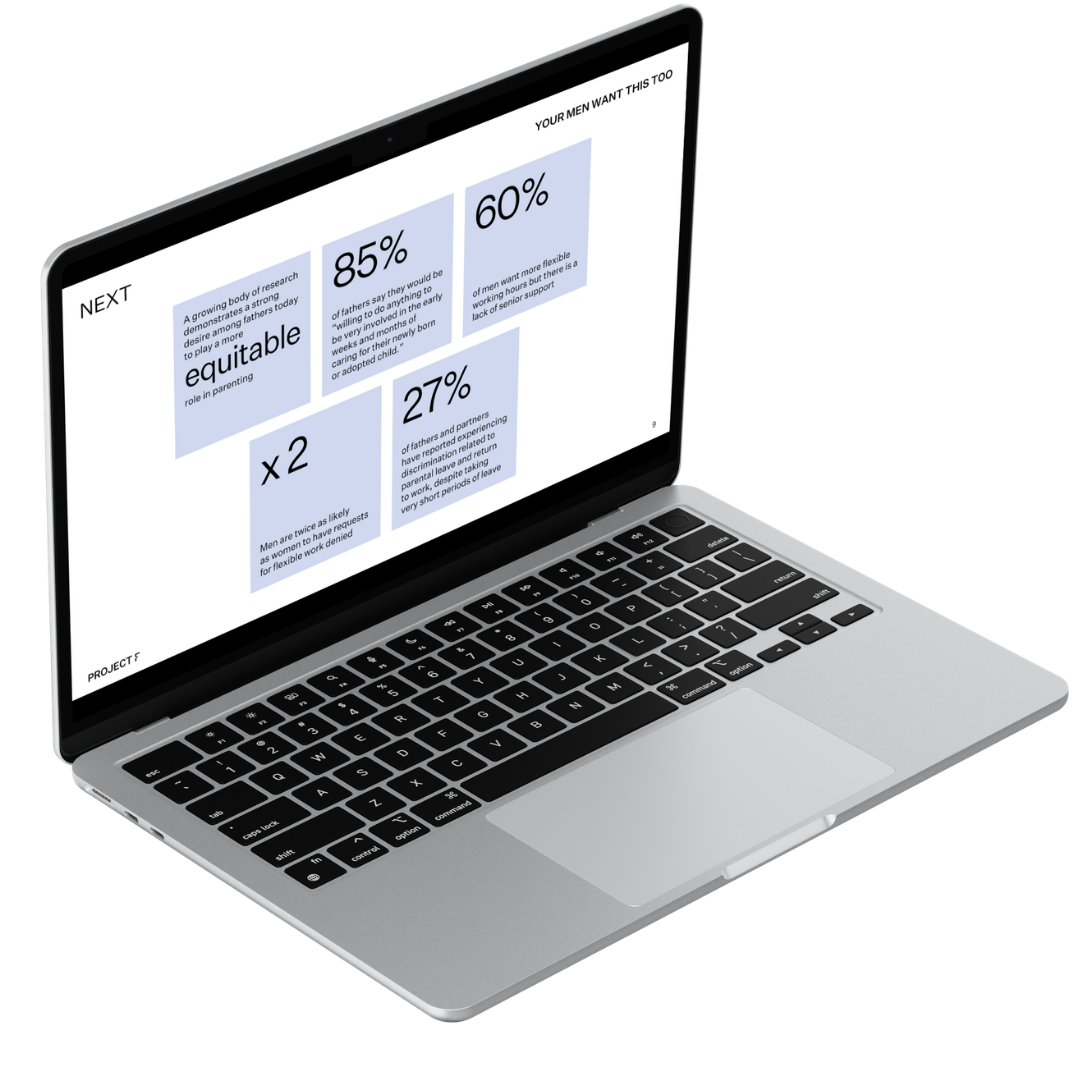
Download the Business Case
Cost Modelling for Equal Paid Parental Leave
Gender equity commitments are easier to fund when the ROI is clear. This interactive model lets you move beyond the moral argument and show commercially minded leaders what equal parental leave actually costs — and what it saves.
The model compares the direct cost of extending paid parental leave equally against the estimated savings from reduced employee turnover. Because the biggest variable in any cost model like this is how you value a replacement hire, we've built in two scenarios: a conservative estimate of 75% of annual salary, and a realistic estimate of 125% — which better reflects the true cost of replacing specialist and technical talent, once you account for recruitment fees, onboarding time, and lost productivity during the gap.
How to use it
Adjust the three inputs to reflect your organisation's context:
Average annual salary — default is $136,000, which reflects average total remuneration in the Australian technology sector according to ABS data current at the time this model was created. Update this to match your workforce if you're outside tech or if salaries have shifted.
PPL weeks — the number of weeks of equal paid parental leave you're proposing to offer
Number of men taking leave — a realistic estimate based on your headcount and expected uptake
The model will calculate the net cost or saving under both scenarios, updating in real time as you adjust the inputs.
Our recommendation
Use the realistic (125%) scenario as your primary case for tech and professional services organisations — it more accurately reflects what it costs to lose and replace a skilled employee. Present the conservative (75%) scenario alongside it to show you've stress-tested the numbers. Together, they bracket the true financial position and demonstrate that equal PPL is, at worst, cost neutral and, at best, a measurable commercial positive.
For the strongest business case, pair this model with the turnover and engagement data from the business case download below, and the Respect@Work risk reduction argument — neither of which is captured in this model but both of which strengthen the overall position.
Make the business case in numbers
This model is provided for illustrative purposes only and does not constitute financial or legal advice. Outputs are estimates based on published research and should be reviewed in the context of your organisation's specific circumstances.